
In the Landscape Dynamics Lab, we are curious about the links between climate, water, and landscapes. Based out of the School of Environmental Science at Simon Fraser University, we bridge geophysics, geomorphology, hydrology, and applied math in conducting our research, which commonly applies a variety of methods from fieldwork, laboratory experiments, and data science.
High Arctic hydrology and geomorpholgy in the context of climate change
The Arctic is warming faster than anywhere else on Earth, with profound consequences on the landscape. Yet, we lack fundamental understanding as to how many landscape features form in High Arctic environments, and as such, we do not know how High Arctic rivers and landscapes will evolve under future climate change. Here we use field campaigns and labratory experiments to inform a deeper understanding of how these remarkable environments are changing before our eyes.
Hydrology and climate extremes
Heatwaves are becoming longer, hotter, and more frequent. Yet, we have relatively little understanding as to how they impact hydrology. How do rivers respond to heatwaves? How are the links between heatwaves and rivers changing under climate change? Where are water resources most vulnerable to the impacts of extreme heat? Here, we use applied data science and cross-discliplinary methods to address the emergent and urgent crises of extreme heat.
Stochastic streams: Nature and consequences
Sediment transport is a stochastic process, characterized by rates of sediment entrainment and deposition that vary in time and space. However, the theory we commonly apply to describe the transport process is primarily deterministic, and assumes the randomness of transport and sediment motions is well described by average conditions. Here, we use experiments and field evidence to develop new theories that link the probabilistic and deterministic views of sediment transport, and we use these theories to better understand the fundamentals of both how and why rivers are the way that they are.
Science-based river restoration and management methods
Mountain streams commonly exhibit pool-riffle and step-pool riverbed shapes, and professional geomorphologists and engineers commonly must develop design approaches to reconstruct mountain and lowland river segments using step-pool and pool-riffle morphologies. But how does one go about designing these features? How do we know if constructed elements will persist under moderate flood stages, and how much adjustment in the constructed condition can be expected? Here we guide design development for a number of projects in rural and urban settings throughout California and Oregon, including dam removal projects.

News of the lab
May 7th, 2026
“Welcome Alyssa Moeller to the Landscape Dynamics Lab as a new MSc student in the School of Environmental Science. Alyssa will be working on the NSERC Alliance funded Alpine Horizons project investigating runoff and water availability in the small headwaters of Garibaldi Provincial Park.”
March 30, 2026
“Huge congratualtions to Jonas Eschenfelder for publishing the first chapter from their PhD dissertation in Communications Earth & Environment, “Seasonal freezing increases High Arctic erosion and landscape response to climate extremes”. The research is based on a novel flume experiment setup which involves placing an entire flume in a commercial freezer, permitting Jonas to examine how thawing of sediment beds influences particle entrainment and flux. The main results are curious and exciting, opening a whole new line of questions for future efforts.”
Link to paper in Communications Earth & Environment
March 26, 2026
“Shawn published a paper in the Journal of Geophysical Research - Earth Surface examining collective particle entrainment using experimental data, exploratory transfer functions and information theory. The research would not have been possible without support from David Furbish.”
Link to paper in JGR Earth Surface
Update: Shawn’s collective entrainment research has now been featured as an Editors Highlight in EOS: Link to highlight in EOS
March 5, 2026
“Congratulations to Jonas for securing Mitacs funding to complete a research exchange in the Fall 2026 with Professors Rebecca Hodge at Durham University and Stephen Rice at Manchester Metropolitan University. Jonas will work with Rebecca and Stephen to build new experiments to test findings from Jonas’s frozen-bed research in more detail (see news above on March 30, 2026), focusing on controls related to subsurface boundary geometry.”
Janaury 1, 2026
“The Landscape Dynamics Lab is very happy to have Dr. Sjoukje de Lange as a new postdoctoral fellow and lab colleague working on Erosional Mechanisms in Permafrost and Ice-Rich Environments (EMPIRE) funded by a Rubicon grant from the Netherlands Organisation for Scientific Research (NWO).”
September 1, 2025
“Congrats to LDL postdoc Sam Anderson, who is continuing his postdoc jointly between SFU and Columbia University, working with professor Radley Horton as a visiting postdoctoral scholar.”
August 19, 2025
“Congrats to Sam and Shawn for publishing their latest paper, “On the mean precipitation characteristics of North American heatwaves”, in Environmental Research: Water!”
Link to paper in Environmental Research: Water
February 7, 2025
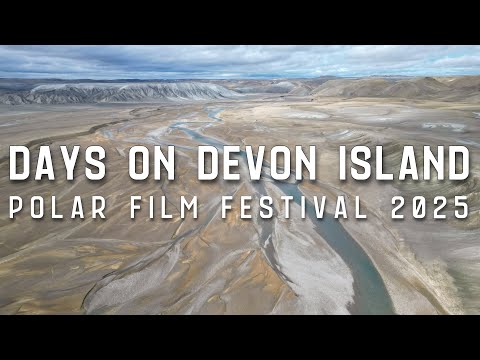
LDL postdoc Sam Anderson submitted a short film to the 2025 Polar Film Festival, exploring our 2024 field season on Devon Island, Nunavut. Check out the video below!
November 1, 2024
Congrats to Shawn and Sam, who just published two papers exploring the spatial and temporal relationships between heatwaves and streamflow!
Link to paper in Earth’s Future
Link to paper in Environmental Research Letters